
Stop. Check. Preserve.
A few calm decisions at the beginning protect food, batteries, electronics, and people who may need help.
- 01Confirm the outage
Check the breaker only if it is safe. Look for neighborhood outages and report the loss of service through your utility’s official channel.
- 02Keep cold air trapped
Do not open the refrigerator or freezer to “check.” Start the food-safety clock and leave the doors closed.
- 03Switch to safe light
Use flashlights, headlamps, and battery lanterns. Avoid candles and improvised flame lighting.
- 04Protect electronics
Unplug sensitive equipment and appliances to reduce surge damage when service returns. Leave one light switched on as an indicator.
- 05Preserve phone power
Lower screen brightness, use low-power mode, close unnecessary apps, and save power banks for communication and alerts.
- 06Check critical needs
Start the backup plan for medical devices or refrigerated medicine. Check on household members and nearby neighbors when safe.
Every closed door buys time.
Refrigerator
About four hours if unopened. Use an appliance thermometer and move perishables to a cooler with ice if the outage will last longer.
Half-full freezer
About one day if the door remains closed. Grouping frozen food together helps it stay cold longer.
Full freezer
About two days if unopened. Food that still contains ice crystals or is 40°F or below may be safely refrozen or cooked.
When in doubt, throw it out. Perishable food held above 40°F for two hours or more should be discarded—one hour when temperatures are above 90°F. Check each item against current FoodSafety.gov guidance.
Open the official food-safety chartSix systems keep the house functional.
See safely
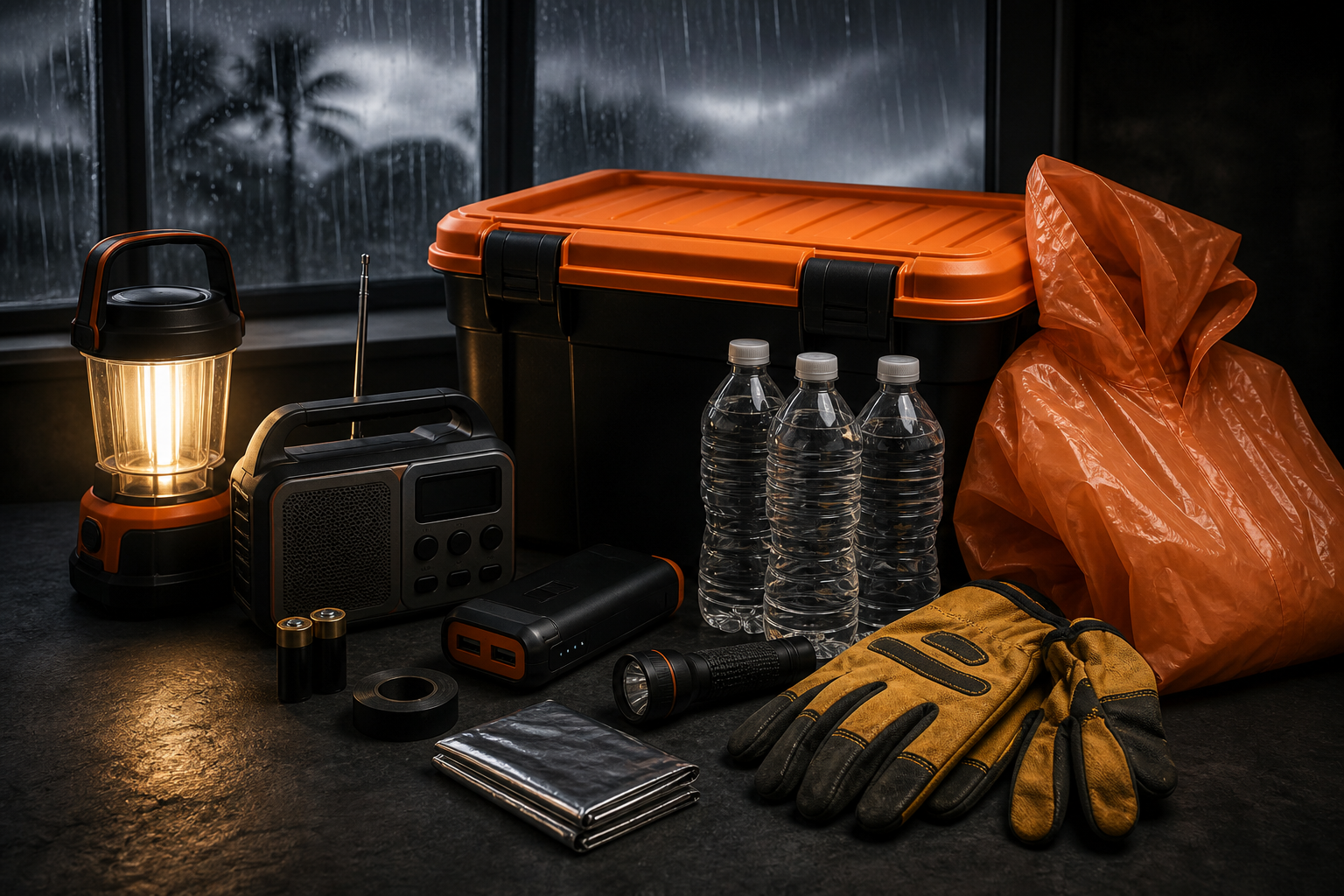
Headlamps, flashlights, room lanterns, and spare batteries in the correct sizes.
Shop lighting POWERRun priorities
Charged power banks, device cables, vehicle charging, and a power station sized for measured loads.
Shop power INFORMATIONStay connected
NOAA weather radio, written contacts, official alerts, utility information, and a paper plan.
Shop communication FOOD + WATERBuy time
Stored water, shelf-stable meals, a manual opener, coolers, ice packs, and appliance thermometers.
Shop food TEMPERATUREStay somewhere safe
Seasonal clothes, blankets, ventilation, cooling options, and a place to relocate if the home becomes unsafe.
Shop shelter gear HEALTHProtect medical needs
Medicine, first aid, hearing-aid batteries, powered-device plans, and refrigerated-medicine supplies.
Shop first aidThe longer it lasts, the plan changes.
Keep cold appliances closed, use battery light, preserve communications, unplug sensitive electronics, and watch official outage updates.
Set up safe sleeping light, protect food with coolers and ice, ration device power, and decide whether indoor heat or cold is becoming unsafe.
Water, sanitation, medicine, food, fuel, and safe indoor temperatures may become harder than powering gadgets. Relocate early if the home cannot safely support the household.
Make the backup plan before the battery starts counting down.
Anyone who relies on a ventilator, oxygen equipment, dialysis equipment, powered mobility, refrigerated medicine, or another critical device needs a device-specific plan made with their health-care provider and equipment manufacturer.
- Record device model, power draw, battery runtime, and compatible backup sources.
- Ask what to do if treatment stops and whether a manual alternative exists.
- Notify the utility and local emergency services about electricity-dependent medical equipment where programs are available.
- Identify a powered location and transportation plan before conditions become urgent.
- Follow labeled storage instructions for medicine and contact a pharmacist or manufacturer when temperature limits may have been exceeded.
A generator never runs in or beside the house.
Operate portable generators outdoors only, at least 20 feet from the home, with exhaust directed away from houses and other occupied buildings. Never use one in a garage, basement, crawlspace, shed, porch, or carport—even with doors and windows open.
Keep the unit dry and follow its manual. Use properly rated outdoor extension cords, let the generator cool before refueling, and never power home wiring by plugging a generator into a wall outlet.
Read official CPSC generator guidancePower the priorities—not the whole house.
Use the backup-power calculator to total essential loads, or browse blackout gear for lighting, communication, food, cooling, and complete kits.
Do not rush the reset.
- 01Confirm stable service.
Turn essential equipment back on gradually and watch for flickering, burning smells, heat, sparks, or damaged cords.
- 02Check food and medicine.
Use recorded outage time and appliance thermometers. Follow official food guidance and labeled medication storage limits.
- 03Reset critical devices.
Verify medical-device settings, clocks, alarms, routers, refrigerators, freezers, and safety systems.
- 04Recharge and restock.
Recharge power stations and lights, replace used batteries and fuel, then update the plan while the gaps are fresh.
Power outage questions.
How long will food stay safe when the power goes out?+
If the doors remain closed, a refrigerator keeps food cold for about four hours. A full freezer holds temperature for about 48 hours, while a half-full freezer holds it for about 24 hours. Use appliance thermometers and follow FoodSafety.gov guidance before keeping or discarding food.
Should I unplug appliances during a blackout?+
Ready.gov advises unplugging appliances, equipment, and electronics to reduce damage from electrical surges when power returns. Leave one light switched on so you know when service is restored.
Can a portable generator run in a garage with the door open?+
No. The CPSC says portable generators must operate outdoors only, at least 20 feet from the house, with exhaust directed away. A garage, porch, carport, basement, crawlspace, or shed is not safe.
What if someone depends on powered medical equipment?+
Make a device-specific backup plan before an outage with the health-care provider, manufacturer, utility, and local emergency services. Know the device’s battery runtime, compatible backup sources, and where to relocate if home power cannot be maintained.
Official references.
This guide provides general educational information. Follow current utility, local emergency, food-safety, medical, and evacuation instructions for the actual outage.