
Your essential devices decide the size.
A useful system must satisfy two different demands: enough watts to run your devices at the same time, and enough watt-hours to keep them running for the time you need. Refrigerators, pumps, and other motors may also demand a brief startup surge above their normal running load.
Build your essential load.
Select only what must stay powered. Then replace every example wattage and runtime with the numbers from your own devices.
Example inputs are planning estimates, not product specifications or medical-power guidance. Measure actual consumption when possible and consult the equipment manufacturer for critical devices.
Four numbers matter.
Running watts
The power a device needs while operating. Add the devices you expect to run at the same time.
Starting surge
The short burst required by some motors and compressors. Your inverter or generator must be able to handle it.
Battery capacity
Measured in watt-hours. This tells you how much energy a power station stores—not how much power it can output at once.
Recharge speed
A battery only lasts as long as its stored energy. Check wall, vehicle, solar, and generator-assisted recharge options before the storm.
Three practical setups.
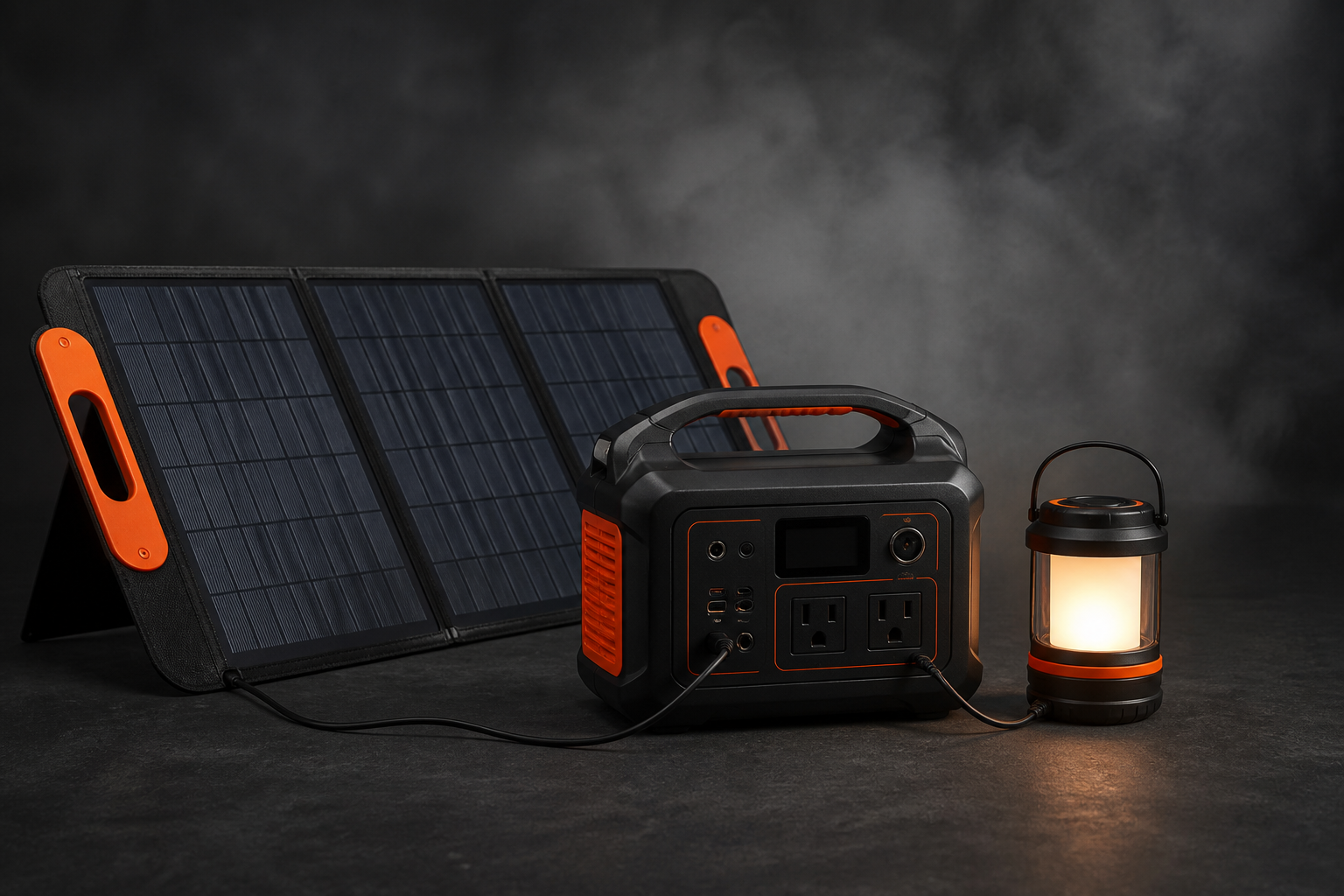
Portable power station
Stored battery energy with no engine exhaust at the point of use. Simple for apartments, phones, lights, fans, and selected appliances—but capacity is finite and recharging may be slow during stormy weather.
Compare power stationsPortable fuel generator
Useful for heavier or longer-duration loads while fuel is available. It also brings carbon-monoxide, fire, noise, wet-weather, storage, and maintenance risks that demand strict outdoor operation.
Read the safety rulesHybrid setup
Run daily essentials from a battery indoors, then recharge it with compatible solar panels or an outdoor generator when conditions allow. More flexible, but only when every component is compatible and safely used.
Build a power setupUse size bands as a starting point.
These ranges describe stored battery capacity—not guaranteed runtime. Actual results depend on your devices, inverter losses, temperature, battery condition, and how often appliances cycle.
Communications
Phones, radio, small LED lighting, and limited laptop use.
Core essentials
Communications and lighting plus carefully managed fan or refrigerator use, depending on measured demand.
Extended essentials
More sustained appliance runtime or a larger combination of essential loads.
Multiple heavy loads
Larger household plans that require more careful electrical, charging, and installation decisions.
Air conditioning, electric water heating, cooking appliances, well pumps, and whole-home loads can push requirements far beyond a small portable power station.
A fuel generator never runs inside.
Operate portable generators outdoors only, at least 20 feet from the house, with exhaust directed away from homes and other buildings. Never use one in a garage, basement, crawlspace, shed, or porch—even with doors or windows open. Keep it dry, use battery-backed carbon-monoxide alarms, let it cool before refueling, and follow its manual.
Do not connect a generator to household wiring without properly installed transfer equipment and a qualified electrician. Improper connections can endanger your household and utility workers.
Read Florida’s generator-safety guidanceNow compare the hardware.
Review power stations, solar-panel bundles, charging options, and accessories without confusing battery capacity with inverter output.
Official references.
This calculator provides planning estimates only. Confirm device requirements, compatibility, installation, and critical medical-power needs with the appropriate manufacturer or qualified professional.