
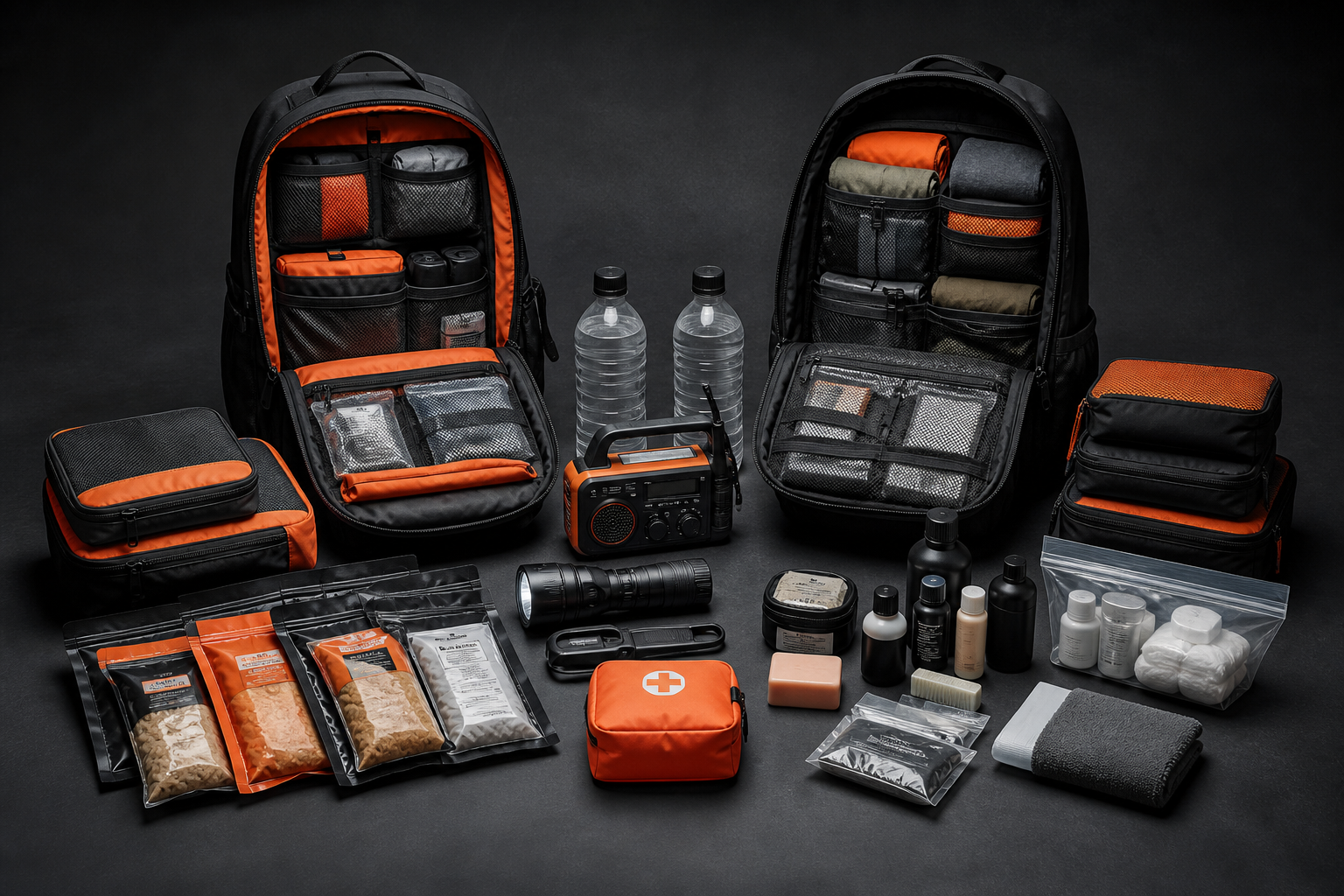
One gallon. Per person. Per day.
The CDC recommends storing at least one gallon of water per person per day for three days. When space allows, work toward a two-week home supply. A 72-hour kit is the starting line—not the maximum.
Store extra for pets, pregnancy, illness, medical needs, and hot climates. Commercially bottled water is the safest and most reliable emergency supply when available.
Pack the systems that keep life moving.
Check off the universal basics, then personalize the kit for every person and animal who depends on it.
Water
- One gallon per person per day for at least three days
- Extra water for pets, pregnancy, illness, medical needs, or hot weather
- Portable bottles or containers for evacuation
- A dependable treatment method as backup—not a replacement for stored water
Food
- Three days of shelf-stable food your household already eats
- Food that needs little or no water, refrigeration, or cooking
- Manual can opener, utensils, and cups
- Infant formula, allergy-safe food, and other dietary essentials
First aid & medicine
- A first-aid kit you know how to use
- Necessary prescriptions and medical supplies
- Medication list, allergies, and important medical contacts
- Spare glasses, hearing-aid batteries, and powered-device backup plan
Light & power
- Flashlight or headlamp for each person
- Battery lanterns for shared rooms
- Fresh spare batteries in the correct sizes
- Charged power banks, device cables, and safe recharge options
Alerts & communication
- Battery-powered or hand-crank emergency radio
- Wireless Emergency Alerts enabled on household phones
- Written family contacts and an out-of-area check-in person
- Printed local map, meeting place, and evacuation routes
Documents & cash
- Copies of identification, insurance, and medical information
- Emergency contacts and household plan on paper
- Cash in small bills in case payment systems are down
- Waterproof pouch for documents and backup digital copies
Clothing, shelter & sanitation
- Weather-appropriate clothes, sturdy shoes, and blankets
- Rain protection and basic emergency shelter
- Soap, sanitizer, toilet paper, hygiene items, and masks
- Heavy-duty trash bags, ties, wipes, and basic cleaning supplies
Your household
- Baby supplies, comfort items, and feeding equipment
- Pet food, water, medicine, leash, carrier, and records
- Mobility, respiratory, refrigeration, or other accessibility needs
- A plan for anyone who may need help leaving quickly
Separate what you carry from what stays home.
The go-bag
Keep it portable. Prioritize medicine, documents, phone power, light, radio, water, compact food, clothes, hygiene, and a known destination. Each person should be able to carry their bag safely.
The home reserve
Store the heavy supplies here: most drinking water, larger food reserves, sanitation, lanterns, power equipment, blankets, tools, and household-specific extras. Build toward two weeks when practical.
Use what you own. Gather backpacks, flashlights, chargers, pantry food, copies of documents, and basic first aid.
Close the dangerous gaps. Add stored water, medicine, emergency alerts, lighting, communication, and personal necessities.
Upgrade later. Compare better power, filtration, shelter, tools, and ready-made kits only after the basics are covered.
Six mistakes that ruin a good kit.
- 01It is too heavy to move.
Water gets heavy fast. Keep the evacuation bag carryable and store the larger reserve at home.
- 02There is food—but not enough water.
Do the water math before filling the bag with gadgets and snacks.
- 03The food needs a missing tool.
Pack the manual can opener, safe cooking method, utensils, and the water required for preparation.
- 04Medicine and documents were forgotten.
A generic kit cannot choose prescriptions, identification, insurance records, or accessibility supplies for you.
- 05Nothing has been tested.
Try the radio, lights, power banks, filters, tools, and bags before the emergency.
- 06The kit expired quietly.
Review it twice a year. Replace expired items, recharge batteries, update contacts, and check sizes and household needs.
Start complete. Then make it yours.
Compare ready-made 72-hour kits, or shop the entire collection to fill only the gaps on your checklist.
72-hour kit questions.
How much water belongs in a 72-hour emergency kit?+
Store at least one gallon per person per day for three days. That means three gallons for one person, six for two people, and twelve for a household of four. Add more for pets, heat, pregnancy, illness, or medical needs.
Is a 72-hour kit the same as a go-bag?+
Not always. A go-bag must be light enough to carry during an evacuation. A three-day home kit can include heavier water, food, lighting, and sanitation supplies. Many households need both.
Should I buy a premade emergency kit?+
A premade kit can save time and provide a useful foundation, but it still needs water, medicine, documents, clothing, device charging, and supplies selected for your household.
How often should an emergency kit be checked?+
Review it at least twice a year and after using anything. Replace expired food, water, medicine, and batteries; recharge devices; update documents; and make sure clothing and household needs still fit.
Official references.
This checklist is general educational information, not live emergency or medical advice. Follow current instructions from local officials and adapt the list with qualified professionals for medical, mobility, dietary, and accessibility needs.