
How many gallons should you store?
This calculates the basic one-gallon-per-person-per-day amount. Add more for pets, pregnancy, illness, medical needs, and hot weather.
Three days first. Two weeks when you can.
One gallon per person per day covers drinking, cooking, brushing teeth, and other basic uses. It is a minimum planning amount, not a promise that every household will use the same quantity.
The minimum start
The first target for every household. Keep this amount ready before the forecast, outage, or water advisory.
More breathing room
A practical intermediate goal when a full two-week reserve will not fit your storage space or budget yet.
The home target
The CDC says to try for a two-week supply when possible. Build toward it gradually and keep the heaviest reserve at home.
A U.S. gallon of water weighs a little over eight pounds before the container. Use several manageable containers instead of one vessel your household cannot safely lift or move.
Safe water needs a safe container.
Unopened bottled water
The CDC calls commercially bottled water the safest and most reliable emergency source. Keep it sealed, protect it from heat and sunlight, and follow the printed expiration date.
Food-grade containers
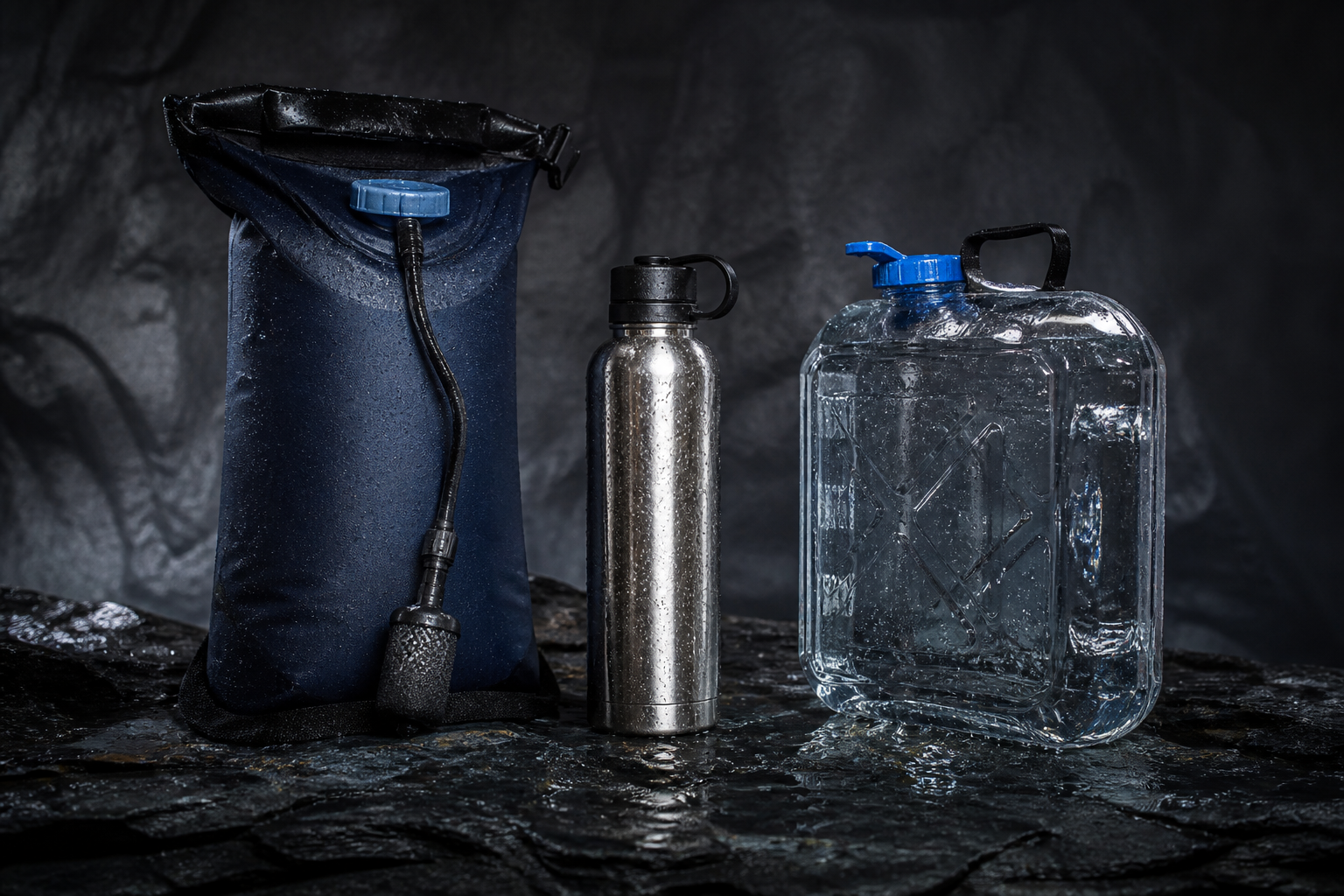
Use FDA-approved food-grade water storage containers when possible. Choose durable, unbreakable vessels with tight lids and narrow openings that make clean pouring easier.
Chemical containers
Never store drinking water in anything that previously held toxic chemicals, including bleach or pesticides. Residue can remain even after cleaning.
Follow the CDC’s container-cleaning procedure before filling. Air-dry the sanitized container and use clean water.
Mark the container “drinking water” and write the storage date where it is easy to see.
Keep it at a cool temperature—ideally 50–70°F—away from direct sunlight, gasoline, pesticides, and other toxic substances.
Replace water you filled into containers every six months. Keep a recurring calendar reminder so the date does not get forgotten.
A filter is backup—not permission to drink anything.
Different threats require different responses. Follow the exact advisory from your water utility, health department, or emergency officials before deciding whether to use, boil, disinfect, or completely avoid the water.
Germs may be the concern
Use bottled water when available. Otherwise follow current official boiling instructions. The CDC says a rolling boil for one minute kills germs; use three minutes above 6,500 feet.
Boiling may not solve it
Use bottled water or another source and follow local instructions. Boiling and disinfecting do not remove heavy metals, salts, fuel, or most chemicals.
Avoid contact entirely
Do not drink, cook, brush teeth, bathe, or wash with the affected water unless officials specifically say an activity is safe.
Which contaminant it is certified to reduce.
“Filtered” is not one safety standard. Many portable filters do not remove viruses. Filters that remove germs may not remove chemicals, and filters that remove chemicals may not remove germs. Check the exact performance claim, pore size, replacement schedule, and source-water limits.
Bleach concentrations vary, and scented, color-safe, splashless, or cleaner-added products may be unsuitable. Follow the current CDC or EPA table for the exact product concentration and water condition—or use a safer source.
Open current CDC treatment instructionsStore first. Treat second. Carry some.
Compare storage, portable filters, and purifiers—or return to the full 72-hour checklist to cover every household system.
Emergency water questions.
How much emergency water should I store?+
Store at least one gallon per person per day for three days. If storage space allows, the CDC recommends trying for a two-week supply. Keep additional water for pets, pregnancy, illness, medical needs, and hot weather.
How long can I keep stored tap water?+
The CDC recommends replacing water you fill into storage containers every six months. Label each container with the date. For unopened commercially bottled water, follow the manufacturer’s expiration date.
Can I store water in any plastic container?+
Use FDA-approved food-grade water containers when possible. Choose durable, tightly closing containers and never reuse anything that held toxic chemicals such as bleach or pesticides.
Does a portable water filter make any water safe?+
No. Portable filters differ widely and many do not remove viruses or chemicals. Water contaminated with fuel, toxic chemicals, or radioactive materials cannot be made safe by boiling, disinfecting, or ordinary filtration.
Official references.
This guide is general educational information. Water advisories and contamination risks vary. Follow current instructions from your water utility, health department, and emergency officials.